Managing multiple complex portfolios across teams leaves gaps in compliance, audit trails, and project visibility. Most mainstream project management tools lack configurable governance features and sector-specific integrations for regulated organisations. This comparison lists alternatives with audit-ready evidence capture and integration options, so programme directors can match a software to their compliance and visibility requirements.
Table of Contents
Videra
At a Glance
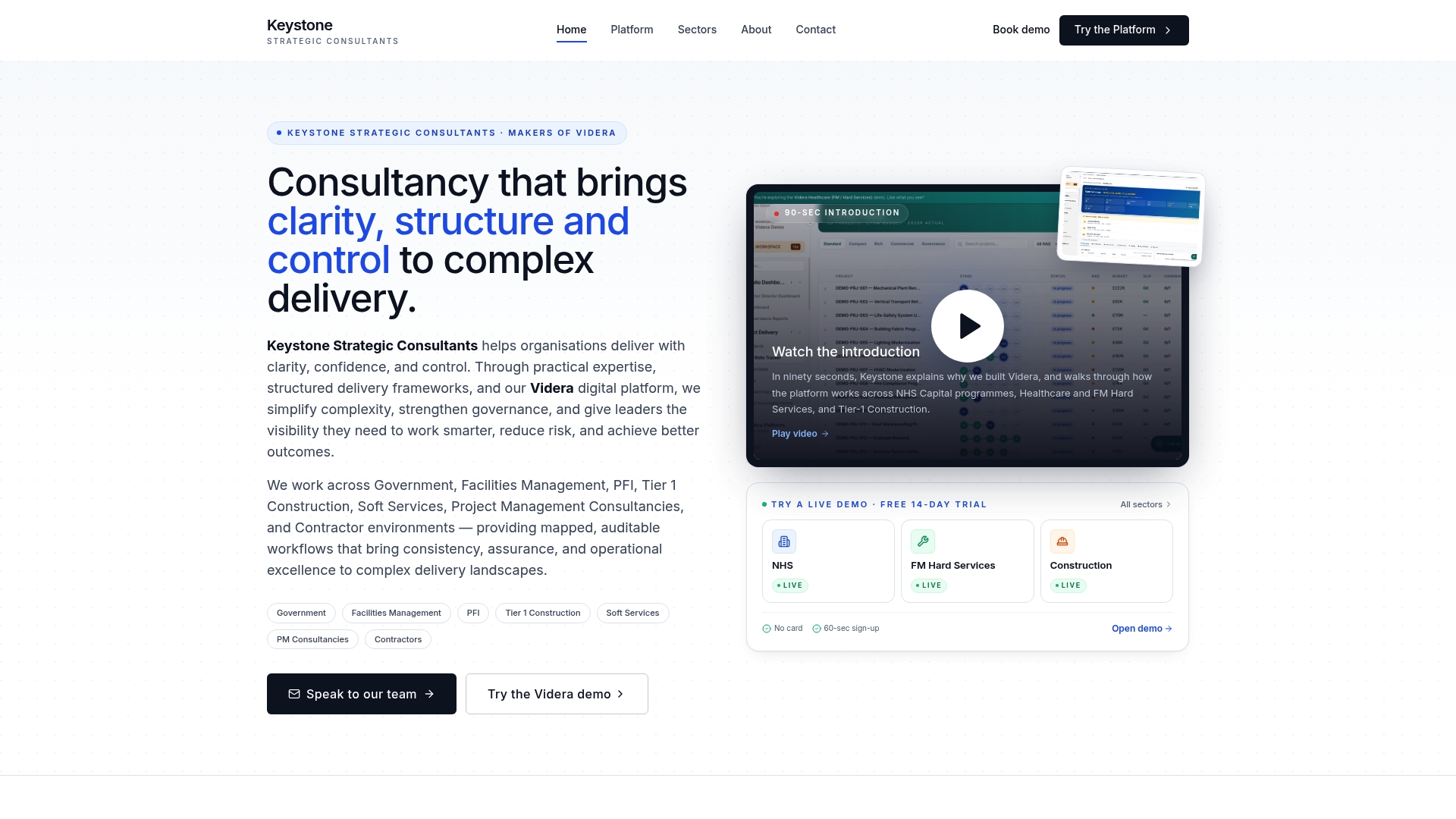
Two decades of practitioner experience shape Videra and its stage-gated governance model. The platform targets healthcare, facilities management, and construction programmes where evidence and approvals must be auditable. AI-powered reporting and built-in evidence management deliver governance visibility across an entire project portfolio.
Core Features
The platform combines stage-gated governance with evidence capture and approval logging so each stage has traceable artefacts. It includes audit-ready compliance documentation for safety, commercial, and quality standards alongside configurable workflows to match sector processes. The system also offers AI-powered automated reporting and board pack generation, plus built-in evidence management to support regulatory audits and inspections.
Key Differentiator
Built from practitioner experience over twenty years, Videra embeds governance and evidence capture into daily delivery activities. That design reduces the need for separate compliance silos by making approvals and evidence part of the workflow. The vendor positions the platform to integrate directly with teams, improving how staff plan, govern, evidence, and report across portfolios.
Pros
Practitioner-led design means the platform reflects real delivery practices rather than theoretical templates, which shortens the gap between tool and daily work. Built-in governance and the evidence store reduce document chasing during inspections and handovers. Automated reporting removes manual assembly of board packs and recurring governance reports, lowering the risk of human error. High configurability lets you model stage gates and approvals to match healthcare, facilities, or construction processes.
Cons
- Potentially complex onboarding for organisations with very different processes.
Who It's For
Large organisations managing complex, multi-project delivery in healthcare, facilities management, or construction will find the platform most relevant. Programme directors, head of estates teams, and principal contractors who must produce auditable governance evidence will benefit most. It is less suited to small single-project teams or sectors with lighter compliance demands.
Unique Value Proposition
The platform’s AI-powered automated reporting and board pack generation produce governance-ready documents without manual compilation. That capability shortens the feedback loop between delivery teams and governing bodies and reduces the administrative cost of reporting. Combined with evidence capture and approval logging, the feature set lets teams maintain compliance records that are ready for inspection.
Real World Use Case
A hospital trust uses the platform to track and document compliance across several sites. Teams capture evidence at each approval gate and use automated board packs to report to regulators and trustees. Project managers keep a single source of truth for approvals, commercial records, and safety documents during handover.
Pricing
Not applicable — informational only. For commercial terms, deployment options, and licence models contact Keystoneconsulting to discuss enterprise sizing and support packages.
Website: https://keystoneconsulting.uk
Planview Platform
At a Glance
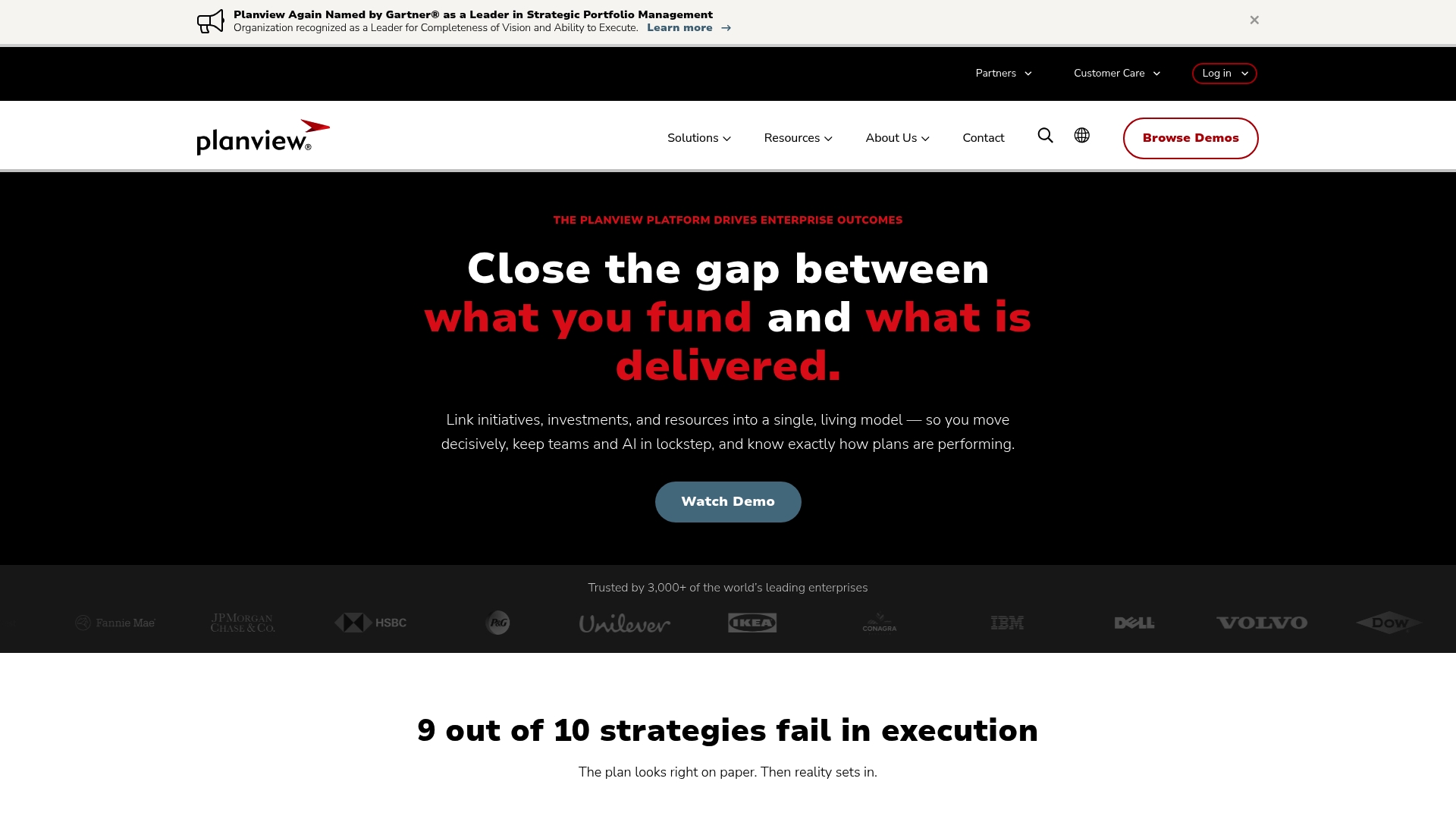
Planview reports more than 3,000 enterprise customers. The vendor advertises recognition as a Leader in Gartner's Magic Quadrant for Strategic Portfolio Management. That positioning reflects a focus on linking strategic investment, capacity, and delivery across finance, product development, and R&D.
Core Features
Planview links strategic initiatives and funding to delivery outcomes while providing real-time portfolio visibility and tracking. The vendor states it integrates with over 60 tools, including Jira, ServiceNow, and Microsoft Azure DevOps. The platform supports agile, waterfall, and hybrid methods and uses AI to assist risk detection and scenario planning.
Key Differentiator
Planview is purpose-built to connect strategy, funding, capacity, and outcomes end-to-end without heavy customisation. That design suits organisations that need a single portfolio model spanning multiple business functions and toolchains. It differs from consultancy-led, team-integrated offerings such as Keystoneconsulting's Videra by prioritising a centralised strategic model rather than embedded process change.
Pros
Analyst recognition and a long enterprise track record lend credibility when you present governance proposals to executives. Broad integration coverage reduces the need for bespoke connectors and helps align PMO, product, and engineering toolchains. AI-enabled features aim to surface risks and compare funding scenarios, which helps prioritise investments across many portfolios.
Cons
- Complex implementation and configuration. Third-party reviews highlight a steep learning curve for initial deployment.
- High-level functionality often requires dedicated training and onboarding to extract value.
- Pricing is not publicly disclosed, which may be a barrier for smaller organisations considering adoption.
When It May Not Fit
If your organisation needs a low-friction, out-of-the-box tool for a single business unit, Planview is likely too heavyweight. Smaller organisations or teams with limited PMO capacity may struggle with the implementation effort and training overhead. If transparent, fixed pricing is a requirement, the lack of published figures may rule Planview out.
Notable Integrations
- Jira
- ServiceNow
- Microsoft Azure DevOps
- Pivotal Tracker
- Broadcom Clarity
- Microsoft Project
- Micro Focus PPM
- Planview PPM Pro
Who It's For
Large enterprise leaders in strategy, transformation, project portfolio management, or digital innovation. Programme offices that must connect funding, capacity, and outcomes across multiple portfolios. Organisations that already operate multiple toolchains and require a single model to prove investment value.
Real World Use Case
According to the vendor, a multinational manufacturing company consolidated more than 35 portfolios and over 4,000 projects into a single view to monitor alignment and control costs. The vendor reports that this consolidation reduced delays and increased throughput substantially. That example illustrates Planview used at scale across complex delivery estates.
Pricing
Not publicly disclosed. Planview states pricing is tailored to scope and deployment and is typically negotiated at enterprise scale. Smaller organisations should plan for a procurement discussion rather than a simple list price request.
Website: https://planview.com
OpenProject
At a Glance
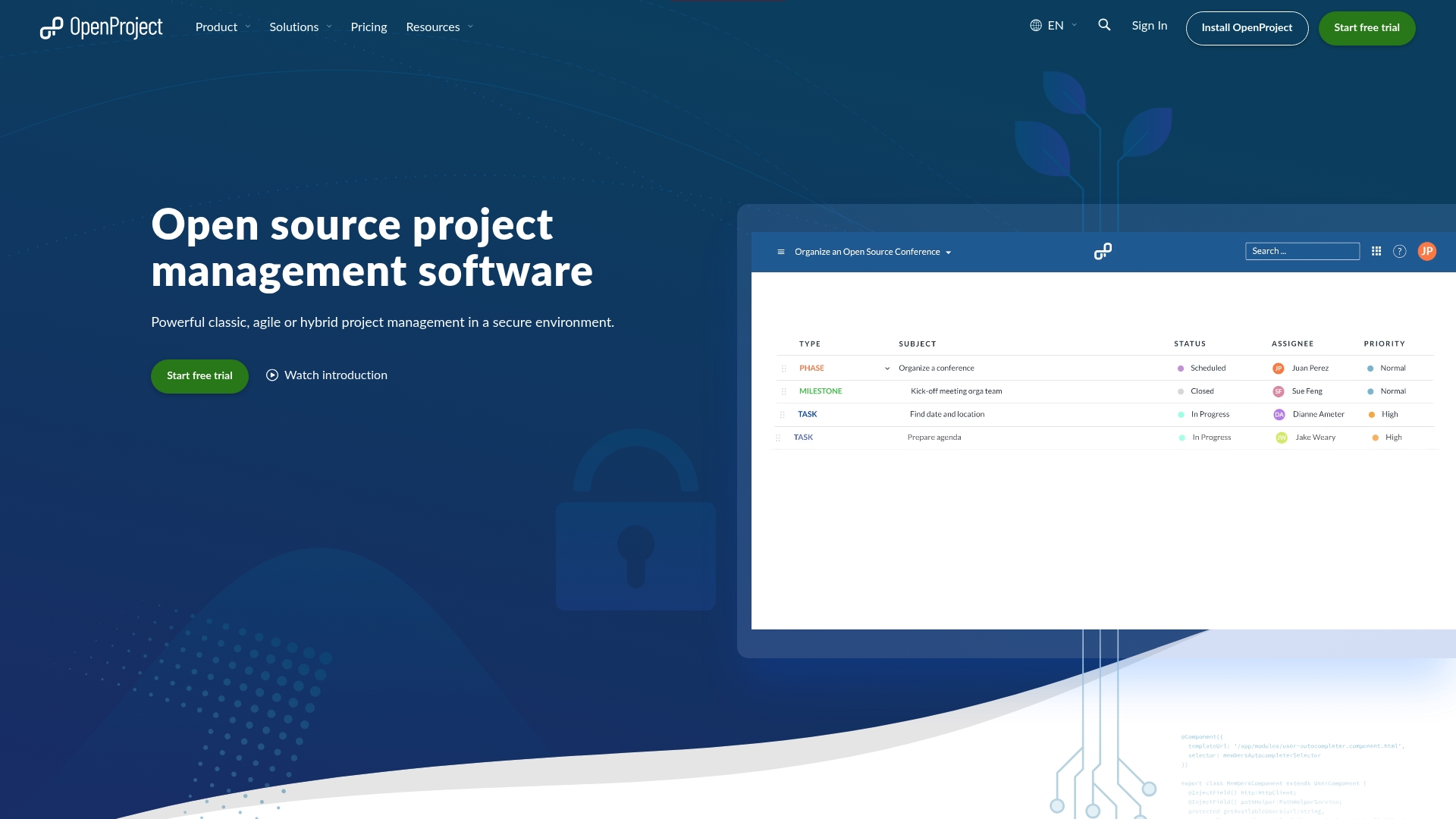
Supports industry standards such as PRINCE2, SAFe, OKR, PM², and PMflex. OpenProject combines an open source core with on-premises and cloud hosting choices to give teams control over data and deployment. The product highlights data sovereignty and modular support options for larger organisations.
Core Features
OpenProject bundles project planning, issue tracking, and boards that work for classic, agile, and hybrid approaches. The platform offers self-managed installs and hosted options, plus features for time tracking, cost reporting, and roadmaps. Integrations with repositories and file services connect project work to code and documents.
Key Differentiator
The defining strength is the combination of an open source code base with enterprise-level security, paid support, and flexible hosting choices. That mix lets organisations keep control of their data while adopting vendor-backed services when required. The result suits teams that must meet internal governance or regulatory rules.
Pros
Open source transparency supports review and customisation, and a community contributes to the code base. Deployment choices let you select self-managed hosting for data control or use an enterprise-hosted plan with vendor support. A strong focus on privacy and compliance fits regulated sectors. Integrations with Nextcloud, OneDrive and Git platforms attach project records to existing document and code flows.
Cons
-
Complex setup for self-hosting: technical expertise is often needed for secure on-premises installs.
-
Advanced features locked to enterprise editions: some capabilities require paid licences and support agreements.
-
Feature breadth can overwhelm newcomers: the extensive options create a steeper onboarding curve.
When It May Not Fit
Teams without in-house operations or systems administrators will find the self-hosted route demanding. Small teams that need a minimal, out-of-the-box SaaS experience may prefer a simpler hosted tool. Organisations requiring every advanced feature without a support budget will face limitations unless they buy the enterprise plan.
Notable Integrations
-
Nextcloud: file sharing and document control.
-
OneDrive/SharePoint: MS Office document storage and collaboration.
-
GitHub and GitLab: link issues and commits to project tasks.
-
openDesk: project-related document management and templates.
Who It's For
Organisations that require open source transparency and strict data sovereignty will benefit most. Large public sector bodies, research institutions, and regulated private firms fit well. Teams that can allocate technical resource for self-hosting or that prefer vendor-hosted enterprise plans will extract the most value.
Real World Use Case
A university IT department manages a portfolio of research and infrastructure projects on OpenProject, keeping datasets on campus servers. A construction firm tracks schedules, budgets, and compliance documents while linking source files from SharePoint. Public agencies use the platform to maintain auditable records and meeting minutes.
Pricing
The community edition is free to download and run. Enterprise editions are available by subscription and custom quote, with paid support and hosted options offered for organisations that require vendor services.
Website: https://openproject.org
Asana
At a Glance
Asana combines an AI Teammates capability with a shared memory that captures past decisions, templates, and outcomes, so teams do less repetitive setup. The platform links tasks, goals, and dependencies through an AI-powered work graph. Enterprise governance features sit alongside pre-built agents for planning, compliance, and reporting.
Core Features
The work graph maps relationships between tasks, goals, and dependencies and feeds that context into automation. A shared memory learns from completed work to reduce repeated setup and to inform AI suggestions. Administrative controls include permission layers, audit trails, and cost management for enterprise deployments.
Key Differentiator
Asana’s distinguishing point is the combination of learning AI agents and persistent shared memory that adapt to how a team works. That approach moves suggestions from generic templates to context aware actions that reference historical decisions. For organisations seeking consultancy led, audit ready workflow mapping like Videra, Asana focuses more on in‑product AI assistance and broad integrations.
Pros
The AI features make routine tasks and status updates less manual, and the platform supplies pre built agents for common workflows such as planning and reporting. Governance tools provide audit trails and permission controls useful for large teams and regulated sectors. The integration ecosystem connects to major productivity suites, collaboration apps, and automation services, which helps cross functional teams keep a single source of truth.
Cons
- Third party reviews report a notable learning curve for new users, and administrators often need time to set up enterprise governance.
- Small teams with limited automation needs may find paid tiers expensive compared with simpler tools.
- Several advanced AI automations and compliance features require higher tier plans and are not available on free or entry level subscriptions.
When It May Not Fit
If your organisation needs hands on consultancy to map governance and produce audit ready artefacts, a consultancy led platform may be a better match. Teams with constrained budgets and no automation roadmap will likely overpay for capabilities they do not use. If the priority is heavy customisation of AI automations on a free tier, Asana may not meet that requirement.
Notable Integrations
Asana integrates with common productivity and collaboration platforms to keep work connected. Key integrations include Google Workspace, Microsoft Office 365, Slack, Zoom, and Salesforce. It also supports file services such as Dropbox and workflow connectors such as Zapier for bespoke automation.
Who It's For
Enterprises and mid sized organisations that need scalable work management combined with AI augmented automation will benefit most. Project managers who require governance, permission controls, and audit traces will find the platform appropriate. Operational leaders in retail, healthcare, finance, and creative agencies can use the integrations to keep cross functional teams aligned.
Real World Use Case
A global retail business deploys Asana’s agents to automate product launch steps, to route approvals, and to assemble executive reports. The shared memory reduces repeat planning work across regional teams. That use reduced administrative handoffs and clarified ownership across teams.
Pricing
Asana uses paid plans with Starter, Advanced, and Enterprise tiers. Detailed pricing and feature comparisons are available on the vendor website. Several advanced governance and AI automations are gated behind the higher tier plans.
Website: https://asana.com
Cerri Project
At a Glance
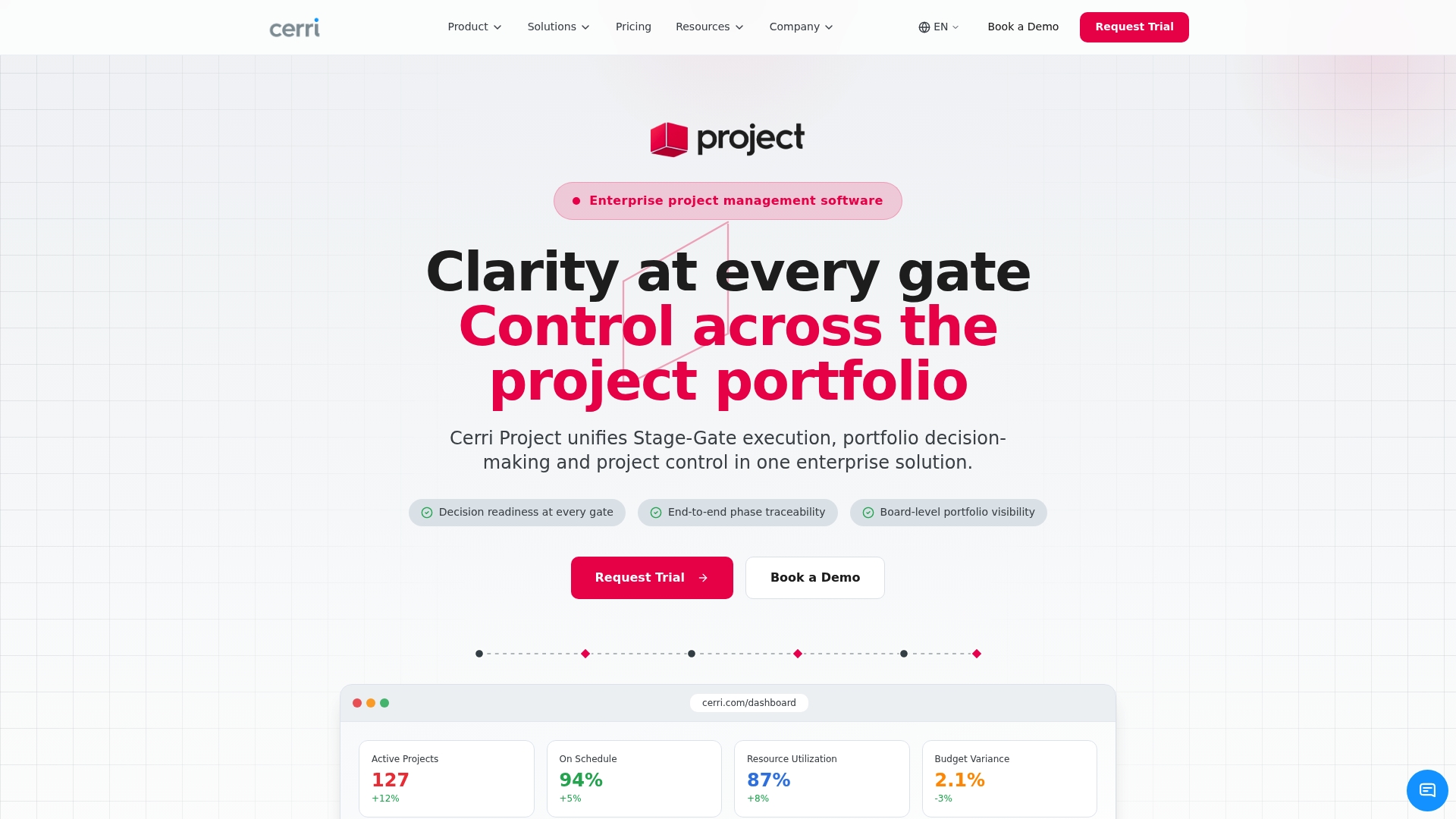
Cerri Project reports more than 500 organisations worldwide use the platform. It targets manufacturing, engineering, and regulated industries with a focus on Stage-Gate execution and portfolio decision-making. The result is a governance centred tool that connects portfolio oversight, financial control, and risk mapping in one environment.
Core Features
The product enforces configurable Stage-Gate criteria and captures decision records so approvals and exits are traceable. Dashboards deliver real time portfolio and project visibility while resource capacity planning uses skill based allocation to balance demand. Financial control includes budget tracking and earned value analysis, and document management lives alongside automated risk escalation and visual risk maps.
Key Differentiator
Cerri Project’s principal edge is a highly configurable platform that enforces structured governance and decision traceability across complex projects. That design suits organisations that must demonstrate audit trails and formal phase gates for new product development. It therefore serves enterprises with strict process discipline more directly than lighter planning tools.
Pros
Customisable Stage-Gate workflows let you map your exact phase gate criteria and capture the approvals history for audits and regulatory reviews. The platform groups portfolio visibility, resource planning, and financial controls so project leaders see budget, capacity, and risk in one place. Flexible deployment options include cloud, on premise, and hybrid, which helps organisations with data sovereignty or internal security policies.
Cons
- A steep learning curve for teams moving from less structured systems. Training and governance change are required for wide adoption.
- Cost may be a barrier for smaller teams or limited budgets, even though vendor pricing is published and scalable.
- Integrations with legacy systems can be complex and may need dedicated IT resources during implementation.
When It May Not Fit
Organisations seeking a lightweight planning tool or a simple task tracker will find the product heavyweight for their needs. Small teams with limited IT support may struggle with the implementation effort and the governance overhead. Buyers who need a rapid, low training solution should consider simpler alternatives.
Notable Integrations
Connects with enterprise systems such as SAP, Microsoft Project, and Jira for project and portfolio synchronisation. Directory and platform integration includes Active Directory and Azure Cloud. A REST API supports custom links to other systems and data sources.
Who It's For
Large enterprises and industrial organisations managing multi phase, multi project portfolios that require strict governance, audit trails, and risk control. Product development, engineering, and regulated teams who must show traceable decisions will find the platform relevant. It fits organisations prepared to invest in governance and change management.
Real World Use Case
A manufacturing corporation uses Cerri Project to run cross divisional product development pipelines and to enforce Stage-Gate discipline at each phase. Project sponsors get real time status, budget figures, and risk visualisations for governance boards. The system also preserves full audit trails for regulatory reviews and post project analysis.
Pricing
Pricing starts at $30 per user/month for the standard subscription. Enterprise licensing and trial options are available and the vendor advertises scalable plans to match larger deployments.
Website: https://cerri.com
Comparison of alternatives
Designed to address the diverse needs of enterprise project management, choosing among the leading platforms requires understanding each tool's nuances and applicability. Every product assessed offers distinct strengths compelling for varying operational demands.
Compliance and audit readiness in project execution
KeystoneConsulting's Videra demonstrates substantial strengths in integrating planning and governance workflows with evidence capture. This feature reduces regulatory risks for sectors necessitating detailed documentation. In comparison, OpenProject supports similar governance needs through customisable hosting solutions but lacks the direct integration of evidence capture within project lifecycles. Meanwhile, though Cerri Project offers traceable decisions through Stage-Gate workflows, the need for added training increases its onboarding complexity. Leadership teams focused on compliance-intensive environments will recognise the operational efficiency these evidence-linked capabilities from Videra bring.
Strategic visibility and cross-functional alignment
Planview excels in providing strategic visibility across portfolios, bridging funding and delivery outcomes via extensive integrations with tools like Jira and Azure DevOps. This advantage proves valuable in organisations managing large-scale, cross-sector projects seeking real-time alignment. Conversely, Videra positions its strength on governance integration rather than broad strategic realignment, which may give Planview an edge in addressing enterprise-wide strategic goals.
Best fit
- KeystoneConsulting’s Videra stands out for enterprises in need of rigorous compliance and evidence-linked governance within critical project lifecycles.
- Organisations heavily focused on expansive strategic planning and integration scenarios might find Planview's deep connectivity and strategic outcome alignment more aligned with their roadmap.
- Teams requiring complete control over deployment environments while prioritising data sovereignty benefit from OpenProject’s transparent and flexible hosting options.
Our pick
For organisations requiring integrated governance modelling combined with audit-ready, real-time evidence capture, KeystoneConsulting's Videra provides value. Its specialised capabilities directly address the workflows and compliance needs of sectors like healthcare, facilities management, and construction. However, strategic planners requiring portfolio-wide alignment integration should consider Planview instead for its broader connectivity focused on enterprise objectives.
Complex portfolio governance revolves around the ability to establish traceable compliance systems integrated into delivery processes.
| Product | Core Feature | Key Differentiator | Best For | Pricing | Notable Limitation |
|---|---|---|---|---|---|
| Keystoneconsulting | Stage-gated governance and evidence tools | Practitioner-led design embedding governance | Healthcare, facilities, and construction sectors | Price not published | Complex onboarding for varied organisational processes |
| Planview Platform | Strategic funding and capacity tracking | End-to-end portfolio for multiple business units | Large enterprises with centralised portfolio operations | Price not published | Steep learning curve for enterprise deployment |
| OpenProject | Project planning with privacy focus | Open source with data sovereignty | Public sector and teams needing controlled deployment | Free; enterprise by quote | Complex setup for secure self-hosting |
| Asana | AI-powered task management and reporting | Learning AI agents and work graph technology | Enterprises needing scalable work management with AI | Subscription tiers on enquiry | Costs and complexity for teams with simple needs |
| Cerri Project | Stage-Gate governance and risk management | Highly configurable governance enforcement | Manufacturing, engineering, and regulated industries | $30/user/month, scalable plans | Learning curve and IT resource needs for complex systems |
How Can Organisations Overcome Complex Governance and Reporting Challenges?
Large organisations managing healthcare, construction, or facilities projects often struggle with governance failures and reporting delays. Keystoneconsulting tackles these pain points with the Videra platform, built over 20 years from practitioner experience. It embeds stage-gated governance directly into workflows, reducing evidence chasing and delivering AI-powered automated reporting for audit-ready compliance.
Videra helps you:
- Capture approvals and evidence at every project stage
- Produce governance reports swiftly with AI assistance
- Align processes with sector-specific compliance demands
If you lead programme portfolios in these sectors, Keystoneconsulting offers a tailored approach to improve governance and lessen manual reporting burdens. Visit Keystoneconsulting to see how Videra can give your teams clear sight of delivery risks and compliance records ready for inspection.
FAQ
How does Keystoneconsulting support regulatory audits?
Keystoneconsulting offers built-in evidence management to assist with regulatory audits. By integrating evidence capture and approval logging into daily workflows, it ensures that governance processes are efficiently documented. Users can expect a streamlined way to maintain compliance records that are always ready for inspection.
What is the difference between Cerri Project and Keystoneconsulting in terms of governance?
Cerri Project enforces configurable Stage-Gate criteria and captures decision records for traceable approvals, making it suitable for organisations needing strict governance. Keystoneconsulting, on the other hand, embeds governance and evidence capture within daily activities, reducing the need for separate compliance silos. This design makes Keystoneconsulting ideal for teams looking for integrated compliance management without additional oversight burdens.
Can I use Keystoneconsulting if my organisation has varying compliance needs?
Keystoneconsulting is flexible enough to adapt to different compliance requirements through its configurable workflows. This capability means that organisational processes can be tailored to fit specific regulatory demands while maintaining comprehensive governance visibility across projects. Teams should prepare to customise workflows to match their unique compliance standards.
Which platform provides better integration capabilities: Planview or Keystoneconsulting?
Planview integrates with over 60 tools, reducing the need for bespoke connectors across various business functions. Whereas Keystoneconsulting focuses on integrating governance processes directly into daily delivery activities, making compliance part of the workflow. This differentiation means that Keystoneconsulting excels for teams prioritising integrated compliance over broad tool compatibility.
How does Keystoneconsulting assist with project visibility?
Keystoneconsulting generates automated reporting, delivering governance-ready documents without the need for manual compilation. This feature provides teams with immediate visibility into project status, supporting effective decision-making and oversight. Users can expect to reduce administrative costs and lower risks associated with human error during reporting.